
Disclaimer: I am not available for crisis calls. If you are in immediate distress please call 780-482-4357. If you are in danger right now, call 911. You can also call or text 988 any time. More crisis resources →

Speak Up Skills

Assertiveness andBoundaries Therapyin Edmonton

You deserve to take up space.

This is the work I do most. It's for people who are good at reading a room, good at keeping the peace, good at making things easier for everyone else, and quietly exhausted by all of it.

In person in Edmonton · By video across Alberta

The work

What assertiveness actually is


Assertiveness isn't about being pushy or rude. It's having the confidence to say what you feel and need, clearly, calmly, and without apologizing for existing.

Most people arrive here thinking assertiveness means getting louder. It doesn't. Loud is what happens when you've swallowed something for six months and it finally comes out sideways. Assertive is what happens at week one, in a normal voice, before the resentment has anywhere to build.

The skill is small and specific. It's saying the true thing at the moment it's still small. Almost nobody was taught it, and if you grew up somewhere that "keeping the peace" was the job, you were taught the opposite on purpose.

Speak Up Skills

Assertiveness means you can:

  • Express your boundaries without guilt
  • Let“no”be a full sentence
  • Disagree without fearing rejection
  • Trust your perspective, even if someone doesn't like it

Why you're so tired

You've spent years:

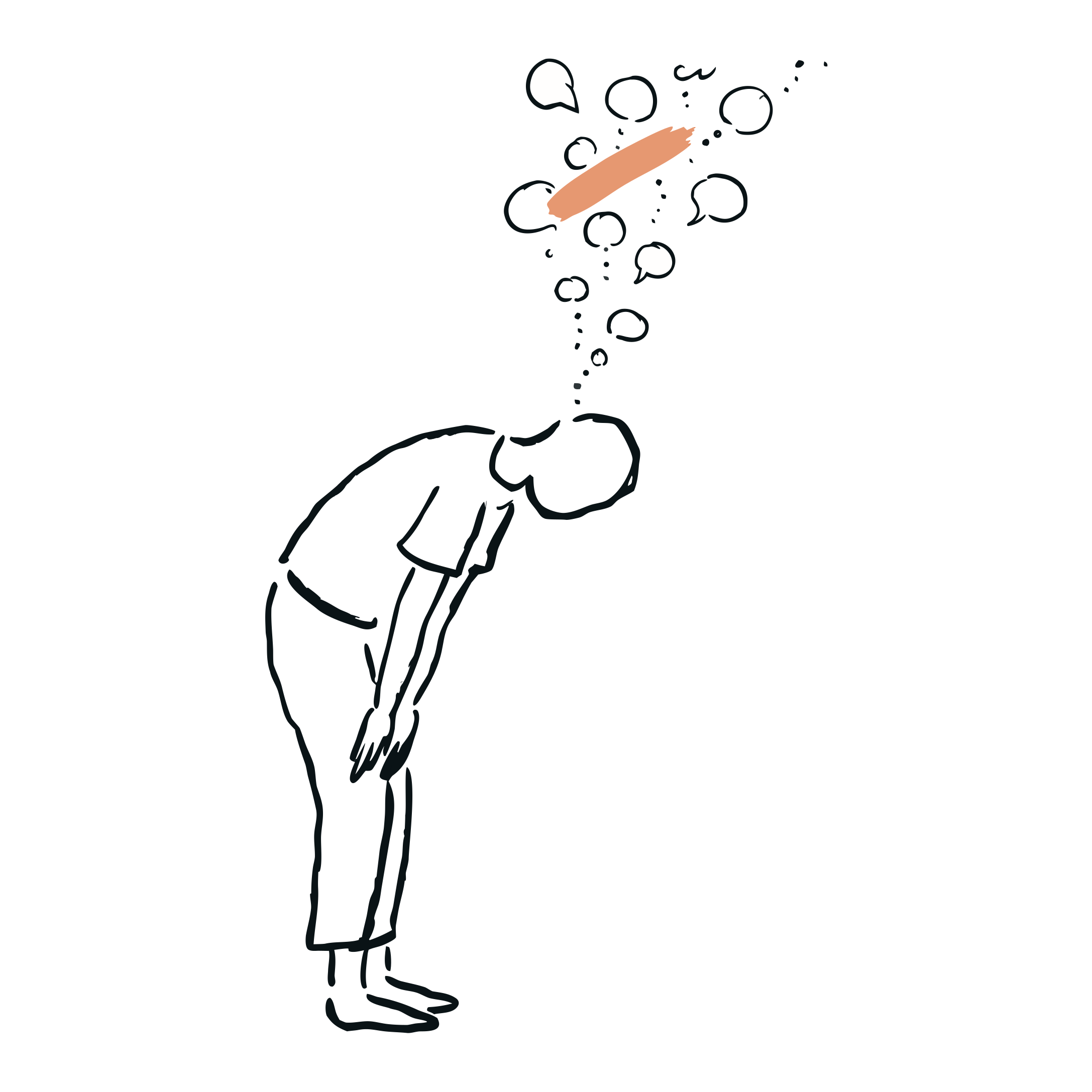
  • Reading the room before you speak
  • Keeping quiet to keep the peace
  • Putting others' comfort first

You deserve to hear your own voice again.

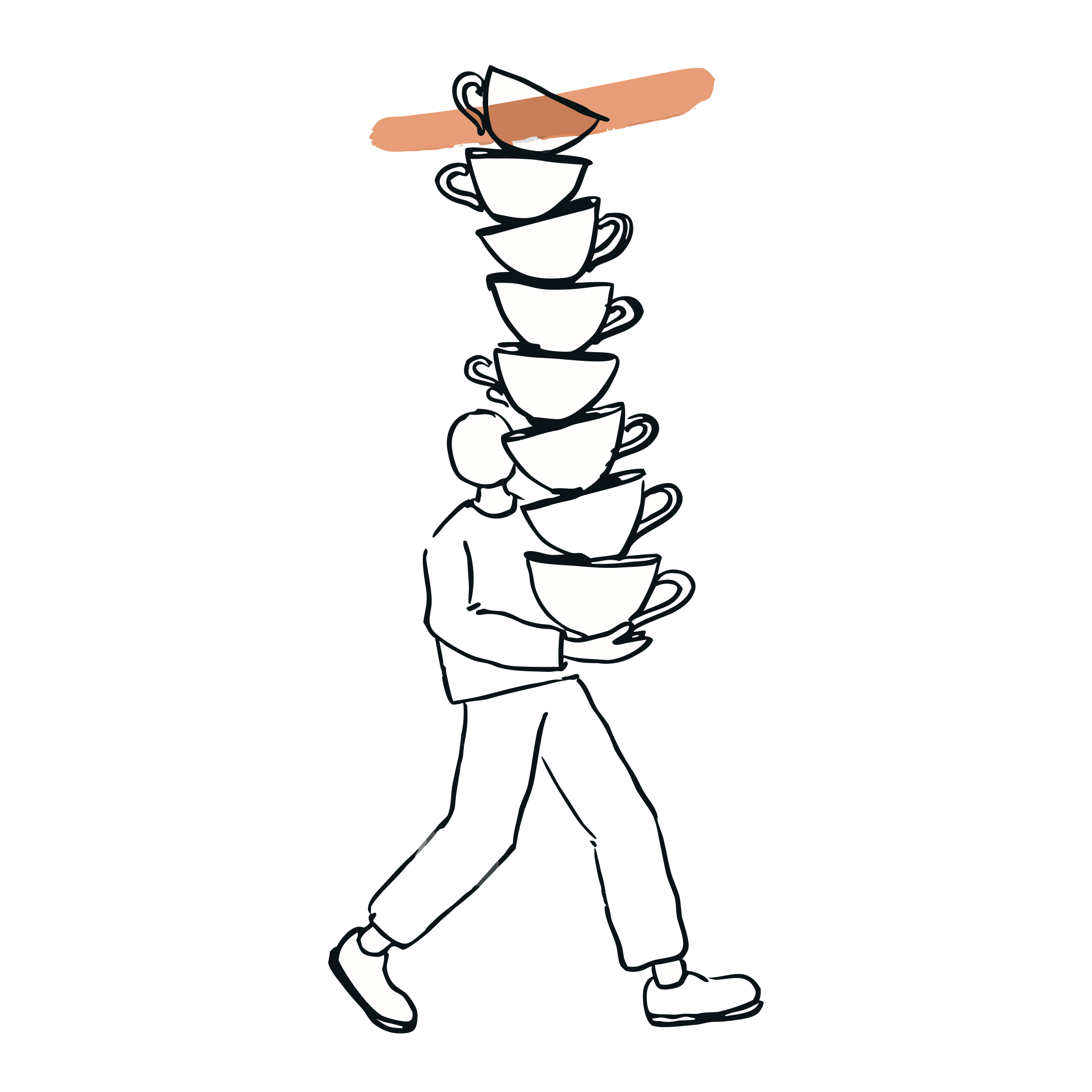
That kind of tired doesn't come from doing too much. It comes from monitoring. From running a background calculation in every conversation about how the other person is doing, what they need, whether they're annoyed, and what you'd have to adjust to fix it. That calculation runs whether or not anything is wrong, and it does not turn off when you get home.

People come in describing it as burnout, or anxiety, or "I just don't know why I'm so drained." Sometimes it is those things. Often it's this.

A figure seen from behind, sitting at the edge of a bed in fading evening light

Who this is for

This is for you if you:

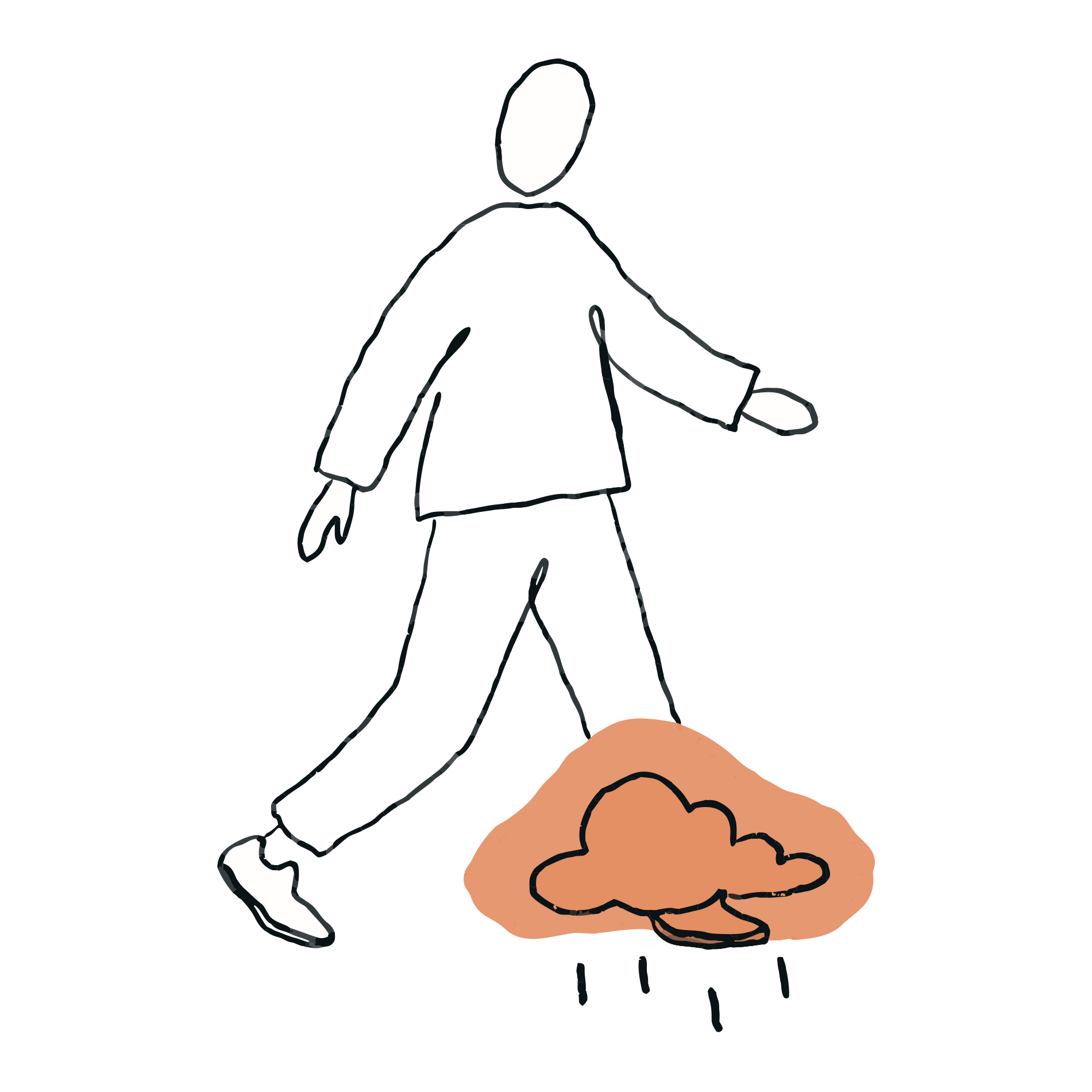
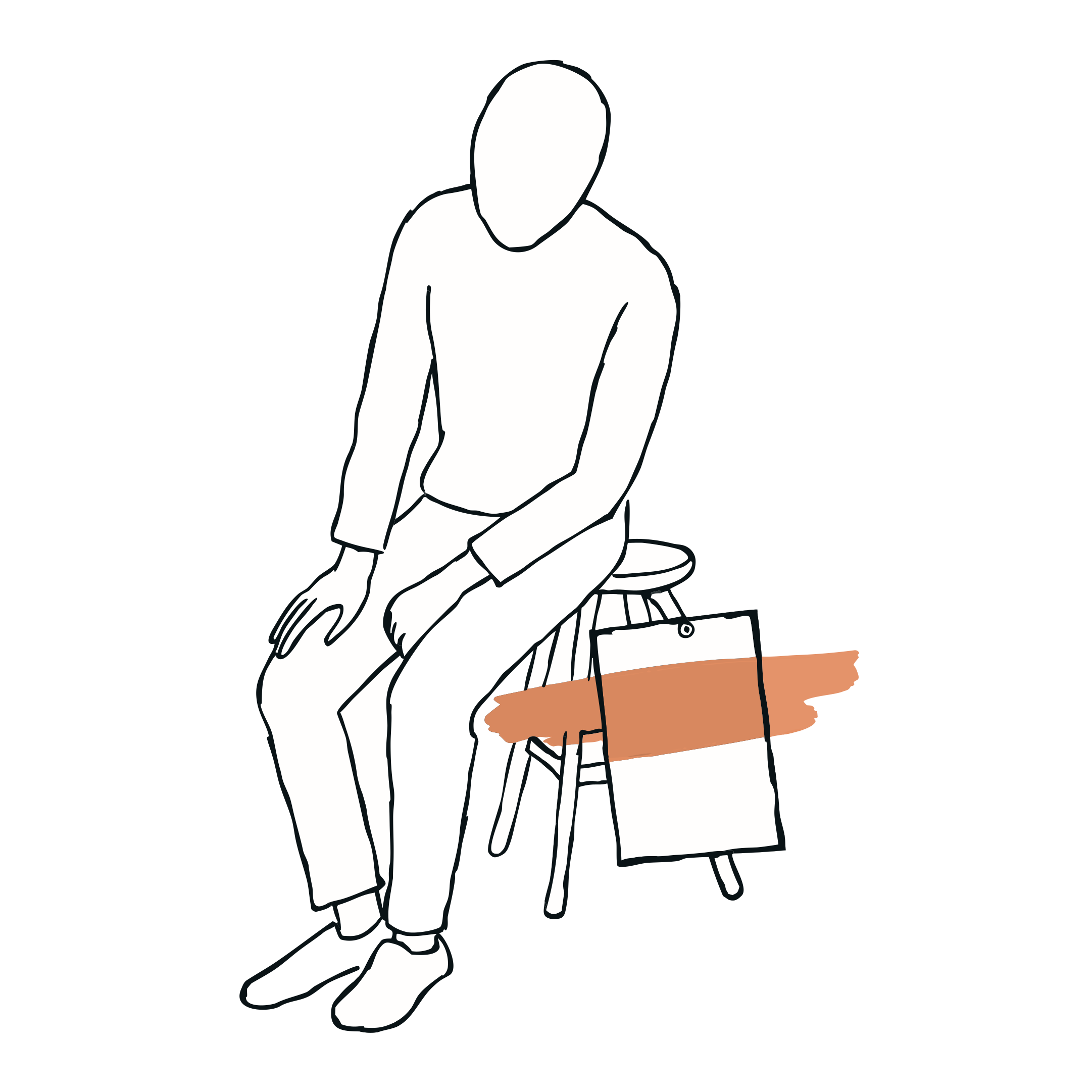
Avoid conflict
Feel guilty saying no
Apologize too much
Fear disappointing others
Shrink yourself to stay liked

This affects everyone: women, men, helpers, perfectionists, leaders, quiet people, loud people. If you've been making yourself small, you're welcome here.

Who this isn't for


I'd rather be straight with you now than have you find out in session four.

This isn't the right starting point if you're in active crisis and need stabilisation first, if you're looking for someone to tell you the other person is wrong, or if what you actually want is a script you can run without changing anything underneath it. I'll give you the words, but the words work because something shifts behind them.

It's also not couples work. I see individuals. If the goal is to be in the room together, I can point you to people who do that well.

If you're not sure which one you are, that's a fine reason to book a free consultation call and ask.

Saying no confidently

Most people can say no. What they can't do is say it once and stop. The no comes out wrapped in three reasons, an apology, and an offer to make up for it, and the wrapping is what invites the negotiation. We practise the short version, out loud, until it stops feeling rude.
Setting boundaries that stick

A boundary you announce and then abandon teaches the other person that your boundaries are a mood. The hard part is never the sentence. It's what you do the second time, when they push, and you feel the old pull to smooth it over. That's the part we work on.

Communicating needs clearly

If you were raised to anticipate other people's needs, you may not have a working list of your own. We start there. Naming it privately comes before saying it out loud, and saying it out loud comes before saying it to the person it's about.

Managing conflict without panic

Conflict avoidance isn't cowardice. It's usually a nervous system that learned disagreement was dangerous. So we work on both ends: what to say, and how to stay regulated enough to say it. Skills without regulation fall apart in the moment, which is why knowing the right words has never been enough.

Trusting your own voice

After enough years of deferring, the question stops being "how do I say it" and becomes "how do I know I'm right." We rebuild that from the inside, using your own read on situations, checked against evidence, until your first instinct stops needing a second opinion.

How I work

  • Warm validation and emotional attunement
  • Accountability that empowers growth
  • Practical skills you can use right away
It's honesty with compassion. Together, we build your assertiveness muscle.

More about Carly 

Carly Colasimone of Good Carma Therapy

Fifty minutes

What this actually looks like in a session

A session is fifty minutes and it usually has three parts.

We start with something real from your week. Not a theme, an actual moment: the text you rewrote four times, the meeting where you didn't say the thing, the family dinner. Specific beats general every time.

Then we slow it down. What did you notice in your body before you backed off? What did you assume would happen if you didn't? Most of the time there's a prediction underneath, and it's usually older than the situation.

Then we practise. Out loud, in the room, with me. It's slightly awkward the first few times and that's the point. The goal is that the sentence has already left your mouth once before you need it in real life.

Between sessions I'll usually give you something small to notice or try. Not homework you can fail. Something to bring back.

Carly's therapy office in Edmonton: a green sofa against a warm terracotta wall, with soft lamp light

FAQ

Questions people ask about this work

How long does this take?

I won't promise a number. Most people notice something shifting in the first six to eight sessions, and most of what people want takes longer than that. We'll check in at six weeks about whether it's working.

Do I have to be assertive with you?

No. Plenty of people start by apologizing for taking up the session. We notice it, we don't make it a test.

What if I try it and it goes badly?

That's session material, not failure. Some of the most useful sessions come after something didn't land.

Is this the same as confidence coaching?

No. This is therapy. We work on the pattern underneath, not only the performance.

Can we do this online?

Yes. Video and phone both work well for this particular work. I see clients in person in Edmonton and by video across Alberta.

I'm not sure this is my main issue.

Then say so at the consultation call and we'll figure out what is. This isn't the only thing I do.

What does it cost?

There's no charge for the consultation call, and that's where I'll walk you through the session fee, insurance coverage, and the sliding scale.

You don't have to do this perfectly. You just have to show up.

Let's Talk About What You NeedCall (780) 952-0091
A person seen from behind, walking down a sunlit tree-lined sidewalk

Not ready to book? That's allowed.

Read what a first session actually looks like, or take something with you and come back whenever you want.

See what a first session actually looks like Take something with you